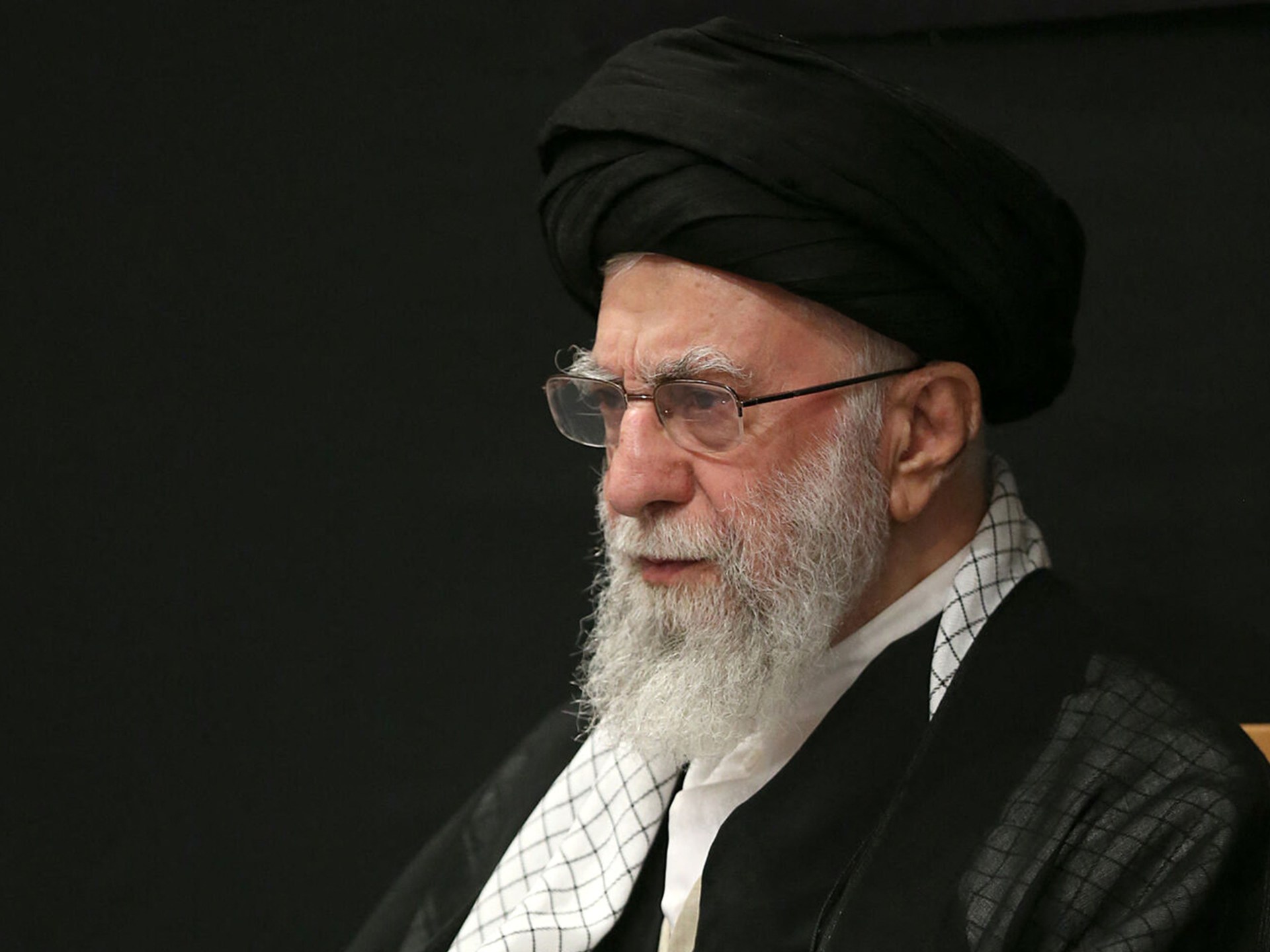
US-Israel Attack Kills Iran Leader, Shakes Middle East
The Middle East has been plunged into an unprecedented era of uncertainty following a joint bombing campaign by the United States and Israel that resulted in the death of Iran’s Supreme Leader, Ayatollah Ali Khamenei. This seismic event, confirmed by Iranian state media and announced by President Donald Trump, marks a dramatic escalation in regional tensions and signifies a profound shift in geopolitical strategy, particularly stemming from Israel's intensified posture after the devastating Oct. 7 attacks. The operation underscores a willingness by both nations to target the highest echelons of Iranian leadership, effectively redefining the parameters of engagement in a deeply volatile region.
The Genesis of a Bold Decision: Israel's Post-Oct. 7 Reckoning
The decision to target Iran’s Supreme Leader, Ayatollah Ali Khamenei, along with leaders of Iran-backed groups like Hamas and Hezbollah, was reportedly made by Israel just days after the brutal Oct. 7, 2023, attacks. This pivotal shift in strategy was driven by a resolute commitment to eliminate anyone deemed responsible for planning or assisting the assault, which marked the deadliest day for Jews since the Holocaust. While the initial decision was swift, the detailed planning for what Israel termed "Operation Roaring Lion" and the United States dubbed "Epic Fury" evolved over time. Specific strategic blueprints began to take shape only after a 12-day conflict between Israel and Iran in June 2025. The ultimate order for the operation was given by Israeli Prime Minister Benjamin Netanyahu in November 2025, according to sources familiar with the matter. This meticulously timed and executed campaign represents a significant departure from previous Israeli operations, signaling an unambiguous intent to target the very architects of threats against its security.
For a deeper dive into Israel's strategic shifts, read our article on Israel's Post-Oct. 7 Decision to Eliminate Iran's Leader.
A Strategic Pivot: Expanding the Scope of Targeting
The targeting of Ali Khamenei underscores a profound strategic pivot by Israel following the Oct. 7 attacks. Traditionally, Israeli retaliatory operations, while often precise and far-reaching, typically focused on commanders and operatives rather than the supreme leader of a sovereign nation. However, after Oct. 7, Israel explicitly widened its scope to include the most senior Iranian and Iran-backed leaders. This expanded targeting was demonstrably evident in earlier operations: Hamas' political leader, Ismail Haniyeh, was killed in Tehran in July 2024, followed two months later by the assassination of Hassan Nasrallah, the long-time leader of Hezbollah, in Beirut.
Khamenei, who had led Iran for 36 years, was viewed by Israel as the primary architect or, at minimum, the most senior Iranian backer of Hamas' Oct. 7 attack. Iranian officials, including Khamenei himself, consistently denied any direct involvement in the assault. Despite these denials, Israel's intelligence pointed to Iran's extensive network of funded and armed militant partners across the Middle East – including Hamas in Gaza, Hezbollah in Lebanon, and the Houthis in Yemen – as central to its regional influence and strategic objectives. The elimination of Khamenei therefore represents not just a strike against an individual, but a direct challenge to Iran's foundational structure and its decades-long regional strategy.
Operation Roaring Lion / Epic Fury: Unveiling the Execution
The operation that led to the death of Iran's Supreme Leader, Ayatollah Ali Khamenei, was a complex, coordinated effort involving both the United States and Israel. Launched as part of a joint bombing campaign that commenced on February 28, the specifics of "Operation Roaring Lion" (as Israel named it) or "Epic Fury" (the US designation) remain highly guarded. What is known is that the operation was the culmination of an extensive planning phase initiated after a significant 12-day conflict between Israel and Iran in June 2025. This timeline highlights the deliberate, long-term nature of the strategic decision made by Israel and its allies to respond to the Oct. 7 attacks with unprecedented resolve. The involvement of the United States alongside Israel underscores the perceived gravity of the threat and the high-stakes geopolitical implications of such an undertaking. The coordination between these two nations in targeting a head of state suggests a shared understanding of the need for decisive action, regardless of the potential for regional destabilization.
Explore more about the motivations behind these actions in our piece on Khamenei's Death: Israel's Hunt for Oct. 7 Attack Architects.
Israel's Long Shadow: A History of Targeted Operations
Israel has a well-documented and extensive history of capturing or assassinating its adversaries, regardless of their location, stretching back to its founding in 1948. This operational doctrine, often characterized by audacity and precision, has seen various tactics deployed over the decades. A notable early example is the capture of Nazi war criminal Adolf Eichmann in Argentina in 1960, who was then brought to Israel to stand trial. A little over a decade later, following the murder of 11 Israeli athletes at the 1972 Munich Olympics, Israel launched a covert mission to hunt down and eliminate Palestinian militants linked to the atrocity.
In more recent years, the methods employed have evolved significantly, leveraging technological advancements. Israel has reportedly used a diverse array of tools, from letter bombs to exploding pagers and mobile phones. More sophisticated operations have included drone strikes and even a satellite-operated, AI-assisted machine gun mounted on a truck. This continuous adaptation of tactics, combined with a persistent commitment to eliminating threats, underscores Israel's long-standing resolve. The targeting of Khamenei, however, represents an unparalleled elevation of this doctrine, moving beyond non-state actors or lower-level commanders to strike at the apex of a sovereign state's leadership.
Regional Aftershocks and Global Implications: A New Middle East?
The death of Ayatollah Ali Khamenei in a coordinated US-Israel attack has immediately sent shockwaves across the Middle East and beyond, throwing the future of the Islamic Republic of Iran into profound doubt. Iranian state media's confirmation of the event highlighted the immense gravity of the situation, acknowledging the deep uncertainty it portends for the nation’s leadership succession and its internal stability. President Donald Trump, in announcing the death, stated it offered Iranians their "greatest chance" to "take back" their country, a sentiment that could further fuel internal dissent or rally nationalist support depending on the prevailing political currents within Iran.
The immediate aftermath is fraught with extreme risk. The killing of Iran's supreme leader inevitably raises the specter of widespread regional instability. Iran has, for decades, cultivated a network of proxy forces – from Hamas and Hezbollah to the Houthis – designed to extend its influence and project power. The decapitation of its leadership could either weaken this network or provoke an unpredictable, forceful retaliation from these groups. The implications stretch beyond the Middle East, touching upon global energy markets, international shipping routes, and diplomatic relations with major powers. The international community now faces the monumental task of navigating an exceptionally volatile geopolitical landscape, where the rules of engagement appear to have been dramatically rewritten.
Navigating a Volatile Landscape: The Road Ahead
The elimination of Iran's supreme leader creates a complex vacuum at the helm of a nation that has been a central player in Middle Eastern geopolitics for decades. The immediate challenge for Iran will be navigating a succession process under immense external pressure, a task that could either consolidate power within existing factions or ignite internal struggles for control. The stability, or instability, of this transition will heavily influence the actions of Iran's proxy forces across the region. Will they be emboldened to avenge their fallen leader, or will a period of uncertainty lead to a more cautious posture?
Furthermore, this event sets a dangerous precedent in international relations, demonstrating a willingness by major powers to target the highest leadership of a state deemed hostile. Such actions could redefine sovereignty and intervention, leading to heightened tensions in other geopolitical hotspots. For Israel, while the operation addresses a perceived architect of the Oct. 7 attacks, it also opens a new chapter of potential long-term animosity and heightened security threats. The global community must now grapple with the immediate humanitarian implications, the potential for wider conflict, and the long-term diplomatic efforts required to restore a semblance of equilibrium in a region fundamentally reshaped by this audacious act.
The US-Israel attack that led to the death of Ayatollah Ali Khamenei marks a watershed moment in Middle Eastern history. Born from the ashes of the Oct. 7 attacks and executed after years of escalating tensions and strategic planning, this operation has reshaped the geopolitical landscape. It underscores Israel’s unwavering commitment to targeting threats at their source, no matter how high, and highlights the complex, interconnected web of regional power dynamics involving Iran and its proxies. As the world watches, the profound implications of this unprecedented event will undoubtedly unfold over the coming months and years, leaving an indelible mark on the future of Iran, the Middle East, and global security.